Water Softener Installation in Delray Beach & Palm Beach County
Hard water leaves scale on fixtures, glass, and the inside of your water heater. Clearview installs and services water softeners sized to your home and your water.
What Hard Water Is
Hard water carries dissolved calcium and magnesium. Much of South Florida's water comes from limestone aquifers, so hardness is common, although the level varies by utility and is different again on a private well. Hardness is usually measured in grains per gallon (gpg), and your utility's water quality report or a simple test tells you where your home stands.
Signs Your Home Has Hard Water
- White, chalky scale on faucets, showerheads, and glass shower doors
- Spots on dishes and glassware after the dishwasher runs
- Soap and shampoo that do not lather well
- Clogged faucet aerators and showerheads
- Popping or rumbling from a tank water heater, often a sign of scale and sediment buildup (see water heater service)
- Frequent descaling needed on a tankless water heater
How a Water Softener Works
A conventional softener uses ion exchange. Water flows through a tank of resin beads that hold on to calcium and magnesium and release sodium (or potassium) in their place. When the resin is saturated, the softener regenerates: it rinses the resin with brine from the salt tank and sends that rinse water down a drain.
Salt-Based vs. Salt-Free Systems
"Salt-free" conditioners are a different technology. They are designed to change how minerals behave so less scale forms, but they do not remove hardness the way an ion-exchange softener does. Each has trade-offs, and we will explain them plainly so you can choose.
A Note on Sodium
Softened water contains some added sodium. If anyone in your household is on a sodium-restricted diet, talk to your doctor. Many softeners can use potassium chloride instead of salt, and some homeowners keep one unsoftened tap or add a reverse osmosis system for drinking water.
Sizing a Softener Correctly
A softener should be sized from your water hardness and how much water your household uses. An undersized unit regenerates too often and wastes salt and water; an oversized one can be a poor fit for low-flow use. We also look at whether a metered (demand-based) control makes sense for your household.
How Clearview Installs Water Softeners
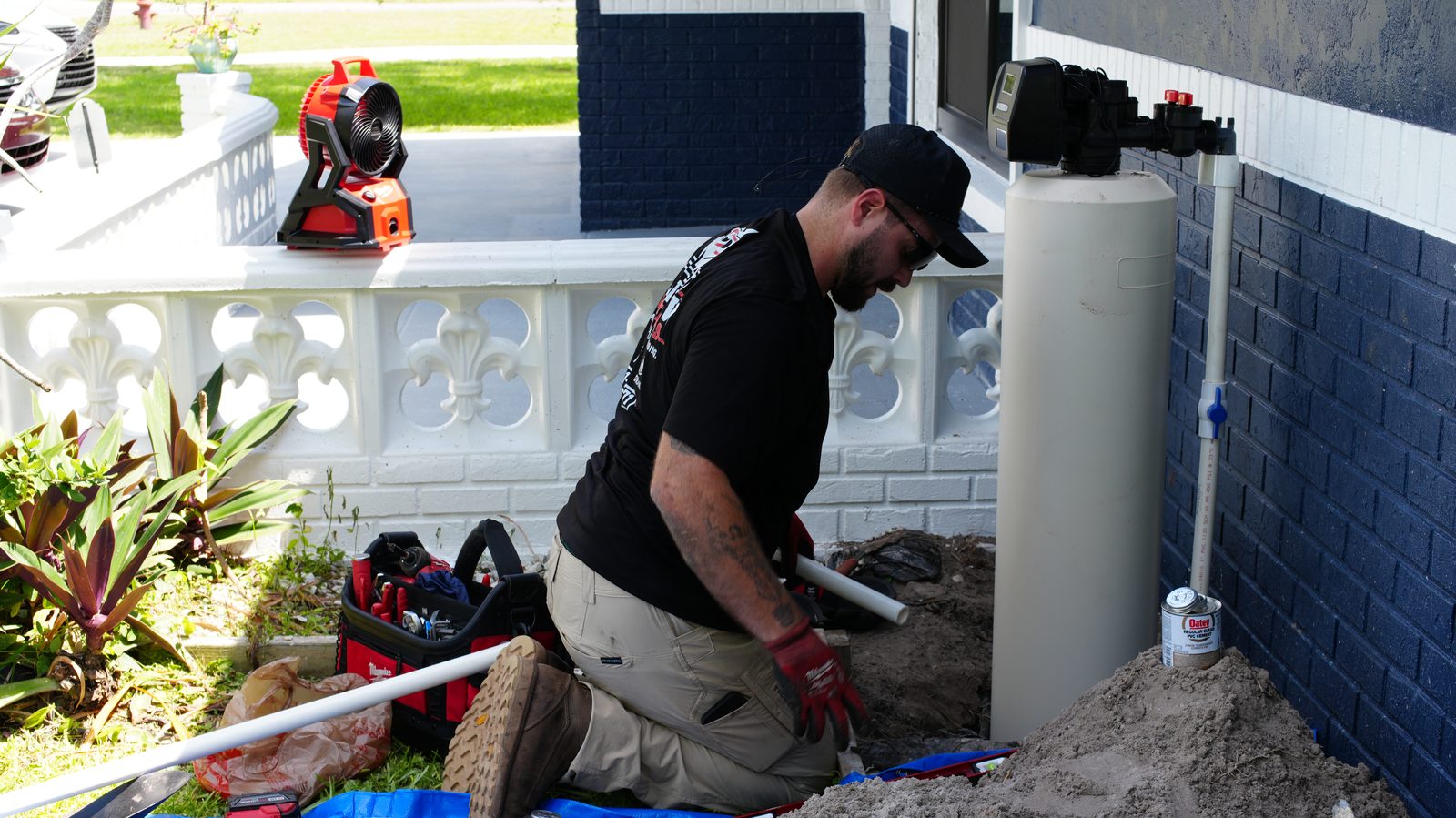
- Placement: usually near the main water line in a garage or on an exterior wall, with room to add salt easily.
- Bypass valve: so the softener can be taken offline for service without shutting off the house.
- Drain connection: regeneration water needs a proper drain with an air gap.
- Power: most control valves need a nearby outlet.
- What gets softened: depending on your plumbing, we can often leave outdoor hose bibs and irrigation on unsoftened water.
- Pre-filtration: where chlorine or sediment is a concern, a filter ahead of the softener can help protect the resin. See whole-house filtration.
Softener Maintenance and Common Problems
Keep the salt tank stocked, and check now and then for a "salt bridge," a hard crust that keeps salt from dissolving. Problems we commonly see include softeners stuck in bypass, clocks or settings that were never adjusted after a power outage, clogged injectors, and resin at the end of its life. If scale is coming back, the softener is probably not regenerating properly.
When to Call a Professional
Call us when you are installing a new softener, replacing an old one, moving one during a remodel, or troubleshooting a unit that no longer seems to work. Because softeners tie into your main line and a drain, a clean installation matters.
Areas We Serve
We install and service these systems in Delray Beach, Boca Raton, Boynton Beach, and communities throughout Palm Beach County, plus nearby areas of Broward County.